In this article
Why Finding the Right Book Changes Everything Many parents believe their child doesn’t like reading.
But in most cases, the real problem is simpler:
The child hasn’t found the right book yet .
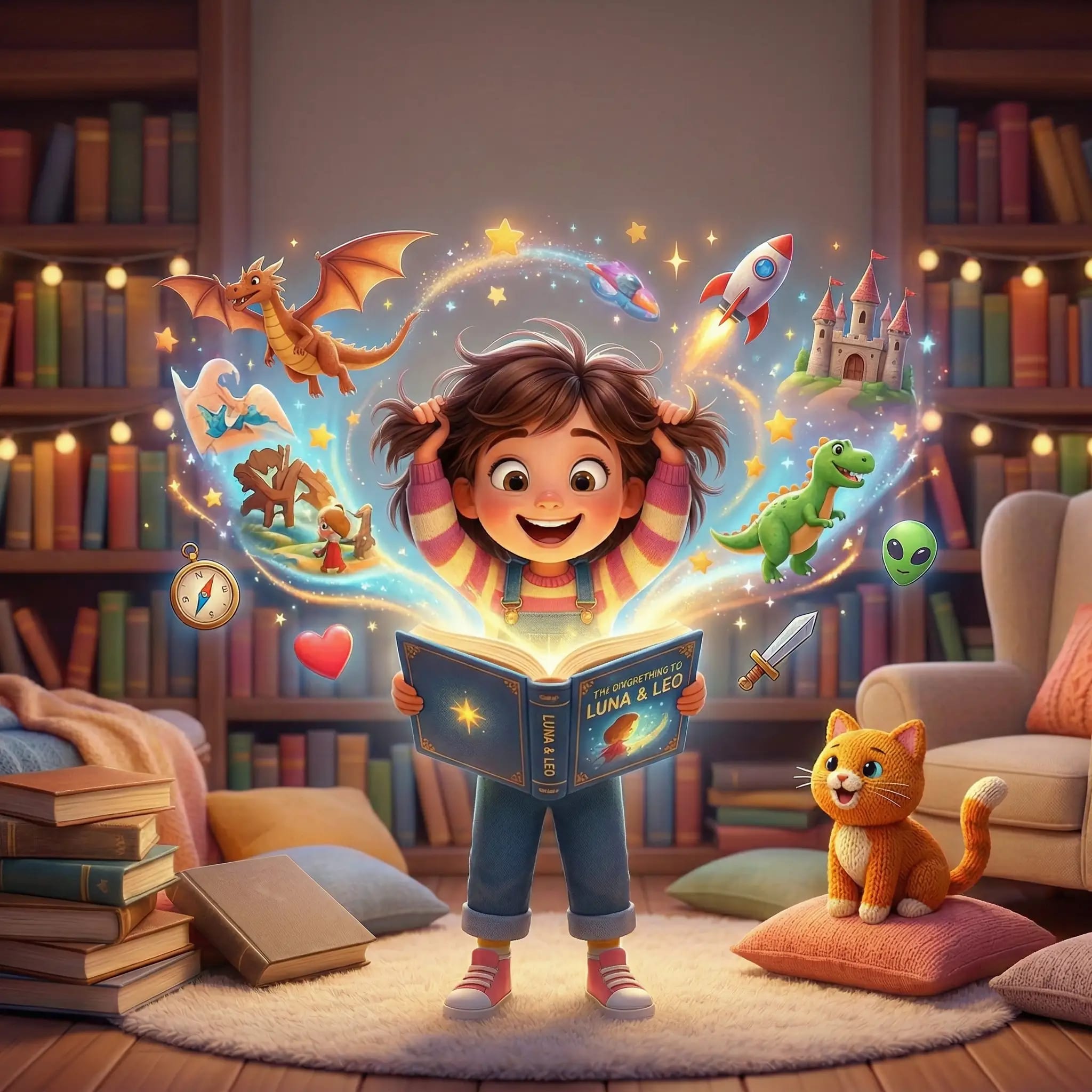
A child who says “reading is boring” can suddenly become deeply engaged when they discover a story that matches their interests.
Research in reading motivation shows that interest is one of the strongest predictors of whether children continue reading (Guthrie & Wigfield, 2000).
In other words:
Children don’t start loving reading first —
they start loving a book , and that leads to reading.
This guide will help you understand how to find those books.
Step 1: Start With Your Child, Not the Book Most parents start by searching:
“best books for kids” “top reading lists” But this approach often fails because it ignores one key factor:
Every child is different.
Instead, begin by understanding your child’s natural interests.
Ask yourself:
What does my child talk about often? What kind of movies or cartoons do they enjoy? Do they like solving puzzles or imagining stories? For example:
A child who loves superheroes → may enjoy fantasy A curious child → may enjoy science or mystery A playful child → may enjoy humor Research suggests that connecting reading material to personal interests significantly increases engagement
Step 2: Identify Your Child’s Reading Personality Children generally fall into different reading preference types.
Understanding this helps narrow down book choices.
🧠 The Curious Thinker Likes asking “why” and exploring ideas
→ Try: mystery, science, problem-solving books
🌟 The Imaginative Dreamer Loves fantasy, magical worlds, creativity
→ Try: fantasy, adventure
😂 The Fun-Loving Reader Gets bored easily, enjoys humor
→ Try: funny books, comics
Step 3: Let Your Child Choose (Even If It’s Not “Perfect”) One of the biggest mistakes parents make is controlling book choices too strictly.
They may choose books based on:
difficulty level school recommendations “educational value” But research shows that choice increases motivation and reading persistence (Guthrie & Wigfield, 2000).
If a child picks:
comics easy books silly stories That’s okay.
Because:
Engagement matters more than difficulty in the beginning.
A child who enjoys reading will naturally progress to more complex books over time.
Step 4: Use the “5-Page Test” Sometimes children pick books that are too difficult, leading to frustration.
A simple method to check:
The 5-Page Test Ask your child to read one page.
If they struggle with:
too many unfamiliar words slow understanding loss of interest The book may be too difficult.
Research shows that reading confidence strongly influences motivation (Snow, Burns & Griffin, 1998).
Choosing slightly easier books builds fluency and enjoyment.
Step 5: Explore, Don’t Assign Book discovery should feel like exploration, not homework.
Instead of saying:
❌ “Read this book.”
Try:
✅ “Let’s see which book looks interesting.”
Take your child to:
libraries bookstores reading apps (with guidance) Research shows that access to diverse books increases reading engagement (Krashen, 2004).
Let them:
browse covers read blurbs flip through pages Sometimes, a single interesting cover can spark curiosity.
Step 6: Talk About Books (This Is the Game-Changer) Many children lose interest because reading feels isolated.
But when reading becomes interactive, engagement increases dramatically.
After reading, ask:
What was your favorite part? Which character did you like? What do you think will happen next? Research shows that discussion improves comprehension and motivation (Whitehurst & Lonigan, 1998).
This transforms reading from a task into an experience.
Step 7: Allow Book-Hopping Adults often feel they must finish every book.
Children should not have that pressure.
If a child doesn’t enjoy a book:
👉 Let them switch.
Forcing completion can create negative associations with reading.
Book discovery is a process.
Sometimes it takes:
3–5 books before finding “the one” And once they find it, everything changes.
Step 8: Use Series to Build Momentum Book series are powerful for building reading habits.
Why?
Because they reduce decision fatigue.
If a child enjoys one book, they naturally want:
the next part the next adventure This creates continuity and excitement.
Many strong readers develop their habits through series.
Step 9: Watch for the “Spark Moment” Every reader has a turning point.
You’ll notice it when your child:
keeps reading without being told talks about characters excitedly asks for the next book reads beyond required time This is the moment when reading becomes self-driven .
Your goal is not to force reading.
Your goal is to help them reach this moment .
Common Questions Parents Ask What if my child hates all books? Start smaller.
Try:
comics short stories illustrated books Focus on enjoyment, not volume.
Should I push “good books”? Not initially.
A “fun book” is more valuable than a “perfect book” at the start.
How long does it take to find the right book? Sometimes instantly, sometimes weeks.
The key is consistency in exploration.
Why This Matters More Than You Think Children who find books they love tend to:
read more frequently develop stronger vocabulary improve focus and thinking A long-term study found that reading for pleasure strongly predicts academic success and cognitive development (Sullivan & Brown, 2013).
But more importantly:
Reading becomes something they choose — not something they’re forced to do.
Where Most Parents Struggle Even when parents understand all this, one challenge remains:
👉 “I don’t have time to constantly guide my child’s reading journey.”
And that’s completely valid.
Finding the right books, discussing them, maintaining consistency —
it requires time and effort.
Final Thoughts Helping your child find books they love is not about:
forcing reading choosing “perfect” books following strict rules It’s about:
understanding your child allowing exploration creating positive experiences Once a child connects with the right story, reading stops being a task.
It becomes curiosity.
And curiosity is what builds lifelong readers.