How to Build a Strong Reading Routine at Home (That Actually Lasts)
Want to make reading a daily habit? Discover practical, science-backed tips to build a stress-free reading routine at home that your kids will actually love.
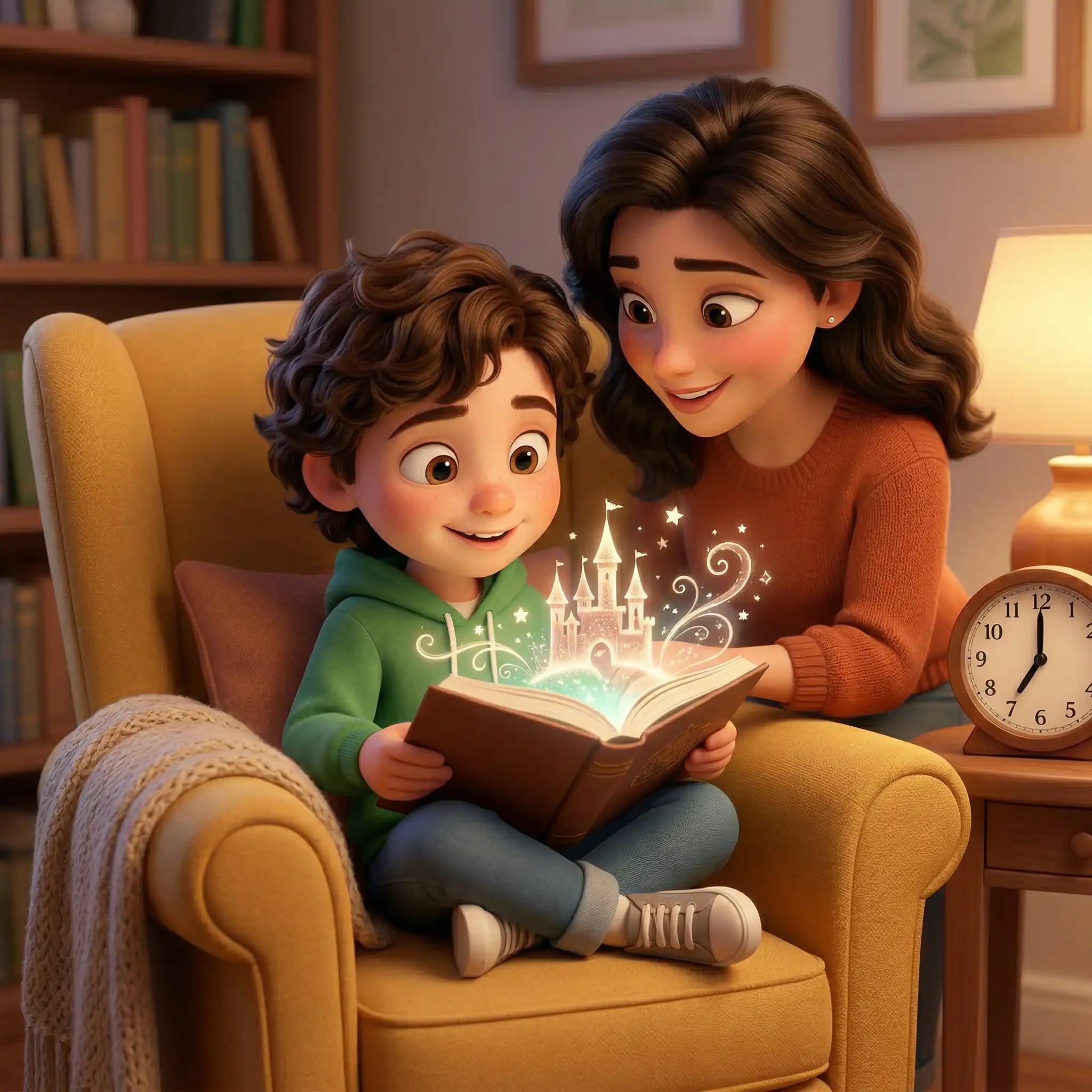
How to Build a Strong Reading Routine at Home
Between soccer practice, homework, making dinner, and just trying to keep the house from falling apart, carving out dedicated time for reading can feel like one more impossible chore on your to-do list.
Often, we set a massive goal: "From now on, we are reading for thirty minutes every single night!" It works for three days. Then, a schedule shift happens, everyone is exhausted, the routine breaks, and the parent-guilt sets in.
If you want to build a reading routine that actually sticks, you have to throw out the idea of perfection. You don't need a picture-perfect library or hours of free time. You just need a few strategic, science-backed habits. Here is how to seamlessly weave reading into your daily life without it feeling like a battle.
1. Rely on "Habit Stacking"
One of the hardest parts of building a new routine is remembering to do it. If you just say, "We will read sometime after school," it will get easily bumped by screen time or snacks.
Instead, use a psychological strategy called "habit stacking." This involves attaching the new habit (reading) to a habit you already do every single day on autopilot.
The Fix: Find an anchor in your day.
2. Aim for Frequency, Not Duration (The "20-Minute" Magic)
When we force kids to sit and read for an hour, they burn out. It is far more effective to read for a short amount of time, but to do it consistently.
The Science: A famous, foundational study published in Reading Research Quarterly (Anderson, Wilson, & Fielding, 1988) tracked how children spent their time outside of school. They found that children who read for just 20 minutes a day encountered 1.8 million words a year and scored in the 90th percentile on standardized tests. Those who read for only 1 minute a day scored in the 10th percentile.
The Fix: Set the bar low enough that you can’t fail. Tell your child the goal is just 15 to 20 minutes. Often, knowing the time commitment is short makes them much more willing to start—and once they get pulled into a good story, they will likely read past the timer anyway.
3. Introduce 1-on-1 Literary Mentorship
Sometimes the biggest hurdle to a home reading routine is the parent-child dynamic itself. When you try to enforce reading time, it can feel like you are assigning homework, which naturally causes kids to drag their feet.
The Fix: Outsource the routine by setting them up with a 1-on-1 literary mentor. Having a dedicated session with an older, passionate reading buddy changes the entire vibe. It becomes an exciting social event rather than an independent chore. A mentor can introduce them to captivating stories, read aloud with them, and discuss the books in a low-pressure, conversational way. Knowing they get to chat with their mentor every week gives children a fantastic, self-driven reason to keep up with their reading routine.
4. Design a "High-Friction" Environment for Screens
We will always choose the path of least resistance. If the iPad is sitting unlocked on the couch and the book is tucked away in a backpack upstairs, the iPad wins 100% of the time.
The Fix: You don't have to ban screens, but you do need to make them harder to access. Put the remote in a drawer. Put a password on the tablet. At the same time, make books incredibly easy to access. Leave highly visual, engaging books face-up on the coffee table, in the car, and even in the bathroom. Make reading the path of least resistance.
5. Let Them Drive the Selection
A routine will never stick if the child views the activity as a punishment. If you are forcing them to read award-winning historical fiction when all they want to read is a graphic novel about a dog that fights crime, the routine will fail.
The Science: Research published in the Journal of Educational Psychology (Guthrie et al., 2004) proves that providing students with autonomy and choices in their reading material drastically increases their reading comprehension, internal motivation, and long-term engagement.
The Fix: Give up control of the content. A comic book, a magazine about video games, an audiobook, or a recipe book all count as reading. If they chose it themselves, they are infinitely more likely to stick to the routine of reading it.
The Takeaway
Building a reading routine isn't about rigid discipline; it is about environment and consistency. Start small, attach it to a habit you already have, let them read the "junk food" books if that's what they love, and don't be afraid to bring in a mentor to keep the spark alive.
Some days the routine will fall apart, and that is completely fine. Just pick the book back up tomorrow.
Are you trying to build better habits at home? Share this post with a fellow parent who is looking for practical, realistic ways to get their kids off screens and into a good book today!