How Much Screen Time Is Too Much for Kids? (A Guilt-Free Guide)
Wondering how much screen time is actually too much? Discover the latest expert guidelines, behavioral red flags, and stress-free ways to manage devices.
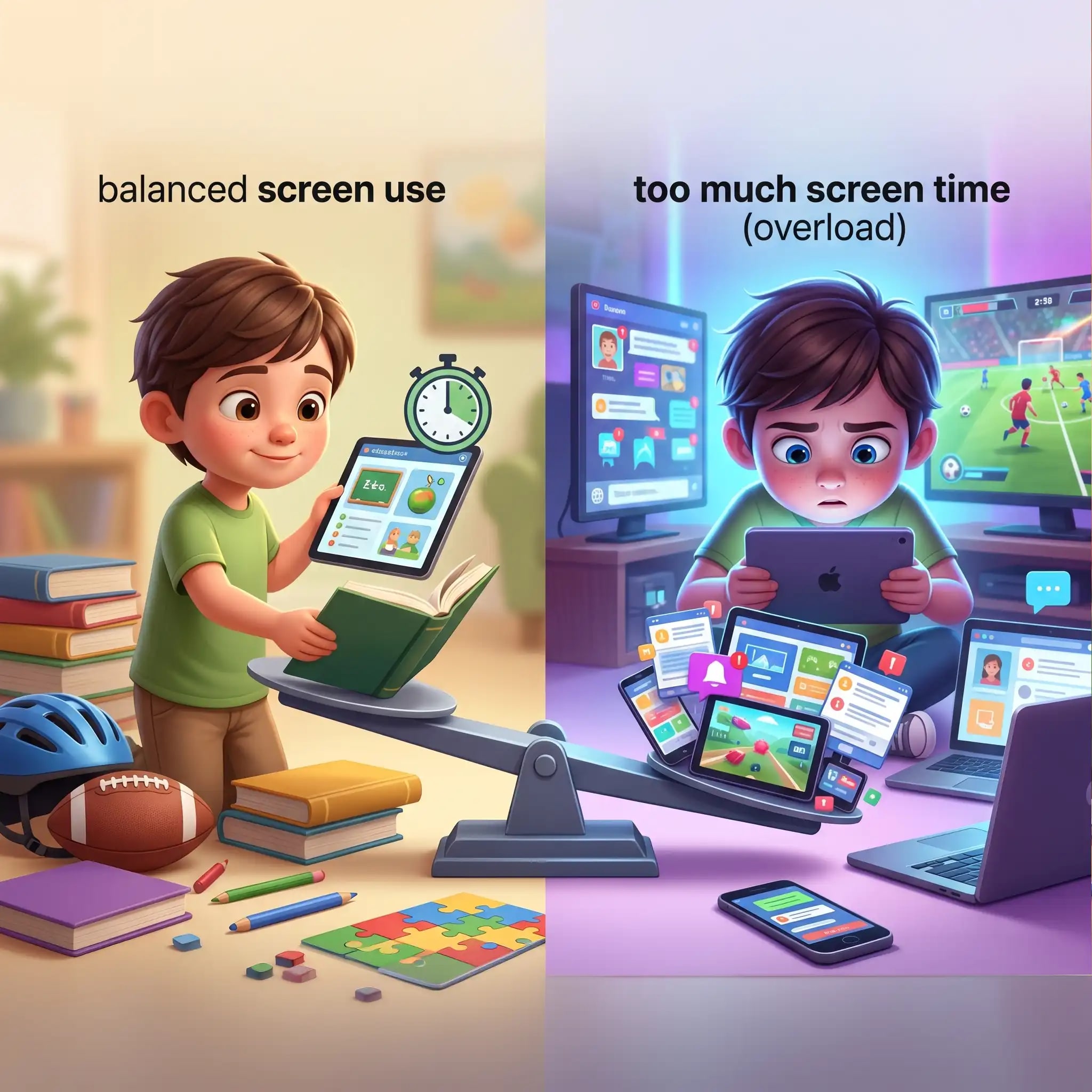
How Much Screen Time Is Too Much for Kids?
You are looking at the clock. It has been 45 minutes since you handed your child the tablet so you could finally reply to a work email and drink a glass of water. A familiar knot of panic forms in your stomach: Is this too much? Am I ruining their attention span?
If you are constantly doing "screen time math" in your head and feeling guilty about the total, you are not alone. We are the first generation of parents tasked with raising kids in a world where screens are practically strapped to our faces.
For years, the advice was simple: Just turn it off. But in our modern, digitally connected world, that is no longer realistic or helpful. So, how much is actually too much? Let’s skip the mom-shaming and dive into what pediatric researchers actually say, and how you can tell if your child needs a digital detox.
The Official Guidelines (And Why They Changed)
Historically, pediatricians gave us rigid hourly limits. But as technology evolved, experts realized that staring passively at a cartoon is very different from an interactive video call with Grandma.
The American Academy of Pediatrics (AAP) updated their guidelines to reflect this nuance. Here is their current, science-backed baseline:
Under 18 months: Avoid screen media entirely, with the only exception being video chatting with family. (The infant brain needs 3D, physical interactions to map the world).
18 to 24 months: If you want to introduce screens, choose high-quality programming (like PBS Kids) and watch with your child to help them understand what they are seeing.
Ages 2 to 5 years: Limit non-educational screen time to 1 hour per day of high-quality programming, co-viewed with a parent.
Ages 6 and older: Place consistent limits on the time spent using media, ensuring it doesn't take the place of adequate sleep, physical activity, and real-world play.
The "Digital Goldilocks" Hypothesis
If you have a child over the age of six, you might be frustrated by the AAP’s vague "consistent limits" advice. How many hours is that?
The Science: A massive study published in Psychological Science (Przybylski & Weinstein, 2017) surveyed over 120,000 adolescents. The researchers proposed the "Digital Goldilocks Hypothesis." They found that a moderate amount of screen time (about 1 to 2 hours a day) actually boosted kids' well-being by allowing them to socialize, play, and learn.
However, once screen time crossed the "tipping point" of 2 to 3 hours of purely passive use on weekdays, psychological well-being began to steadily decline. The takeaway? A little bit of screen time is fine (and even helpful). It is only when it pushes out other healthy activities that it becomes toxic.
Forget the Clock: The 3 Red Flags of "Too Much"
Instead of obsessing over a stopwatch, child psychologists suggest looking at your child's behavior. Screen time is "too much" when it starts interfering with their real life.
Watch for these three behavioral red flags:
1. The "Withdrawal" Meltdowns It is normal for a child to be disappointed when screen time is over. It is not normal if turning off the TV triggers a severe, violent, or hour-long meltdown. If your child cannot self-regulate after the device is removed, their brain's dopamine system is becoming overloaded, signaling that they need a strict detox.
2. The Death of Other Interests Does your child still want to ride their bike, build with LEGOs, or draw? If your child has lost interest in all of their offline hobbies and only wants to talk about, watch, or play on screens, the digital world is taking up too much cognitive real estate.
3. Disrupted Sleep Patterns Screens emit blue light, which actively suppresses melatonin (the sleep hormone). If your child is struggling to fall asleep, waking up constantly in the night, or seems chronically exhausted, their screen time—especially in the two hours before bed—is definitively too much.
How to Create Healthy Boundaries (Without the Fights)
If you realize your child is getting too much screen time, don't panic. You don't need to throw the iPad out the window. You just need to shift the boundaries.
Focus on Context, Not Just Minutes: 30 minutes of actively learning to code or creating a digital art project is vastly superior to 30 minutes of mindlessly watching "unboxing" videos on YouTube. Push them toward active creation rather than passive consumption.
Establish "Tech-Free Zones": Make certain areas of the house entirely screen-free. The two most important zones are the bedroom (protect their sleep) and the dinner table (protect your family connection).
Use the "First-Then" Rule: Screens should never be the default activity. Set a house rule: First we play outside, do our chores, and read a book. Then we can have screen time. This ensures their developmental needs are met before the digital zoning-out begins.
The Bottom Line
There will be days when everyone is sick, it’s pouring rain, and your kids watch three movies back-to-back. Give yourself grace—one heavy screen day will not break their brain.
The goal isn't absolute perfection. The goal is making sure that over the course of a week, your child is spending far more time building, running, talking, and sleeping than they are staring at a glowing rectangle.
Share this post! Are you navigating the tricky waters of digital parenting? Hit the share button to pass this science-backed, guilt-free guide to a fellow parent today!
What is your biggest daily challenge when it comes to managing screen time in your home?
Responses
No responses yet. Be the first to share your thoughts.