Bookstaken pairs kids with caring mentors who turn reading into engaging conversations, inspiring them to eventually write their own stories.
Responses
No responses yet. Be the first to share your thoughts.
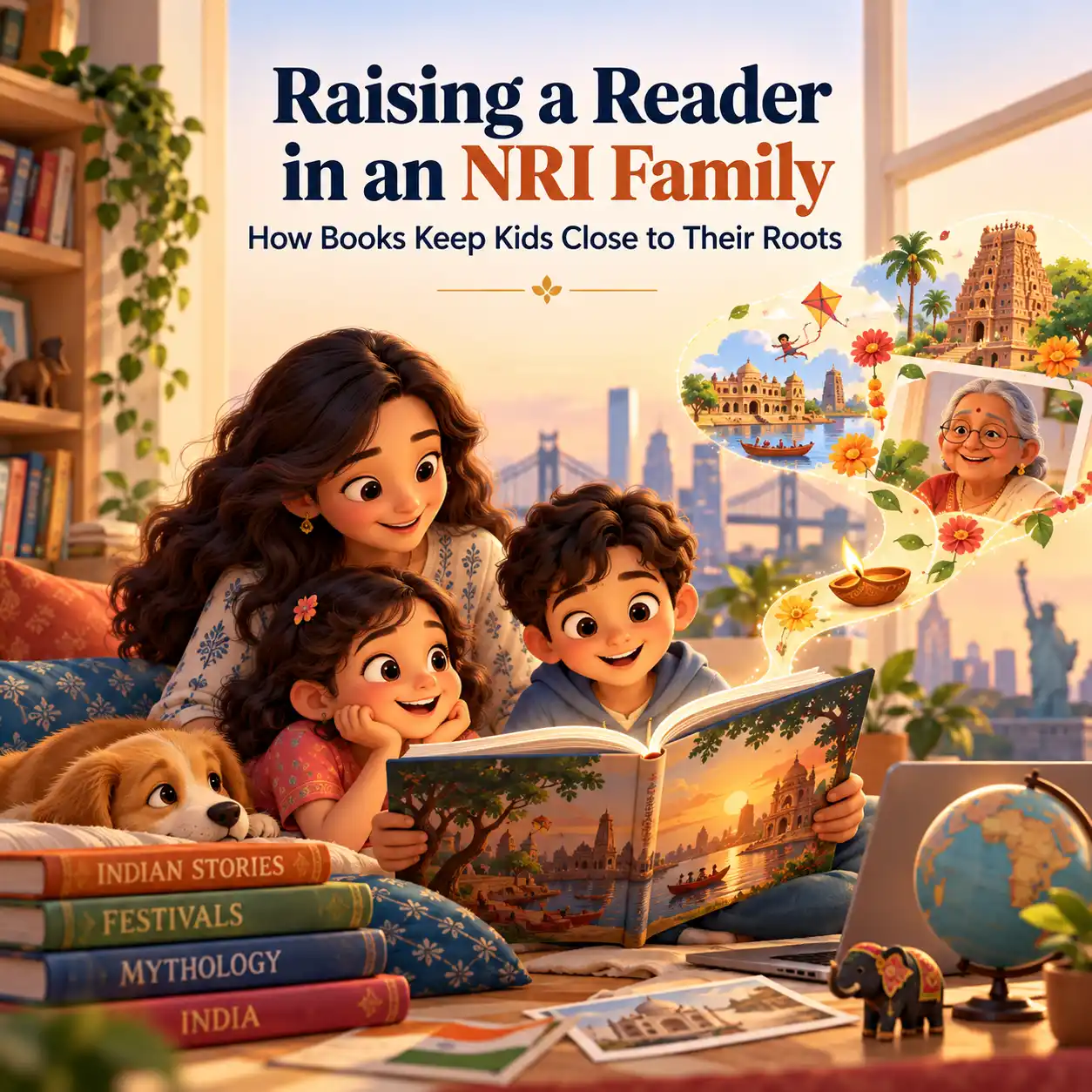
The simplest way to keep an NRI child close to their roots is to make India part of what they read, not a separate lesson. Mix books set in India into their everyday reading, read festival stories before each festival, keep a little reading in your mother tongue, and let grandparents join story time. A child who meets their culture in stories they enjoy grows up feeling it belongs to them.
Many NRI parents tell us the same thing. Their children read happily, but everything they read is set somewhere else. Indian culture shows up only at festivals or on video calls with grandparents, and it slowly starts to feel like their parents' world rather than theirs.
Books can change that quietly, without a single lecture.
Why reading matters more for NRI children
At school your child reads in English, about places and people around them. That is good; they should feel at home where they live. But children build their sense of who they are from the stories they hear. If none of those stories include a dadi, a Diwali or a dosa, India becomes something they visit, not something they are part of.
Stories also give children words for things they feel but cannot explain: being the only one in class who celebrates Holi, or missing grandparents they see twice a year.
1. Mix Indian books into ordinary reading
Do not create a separate "Indian reading time" that feels like homework. Simply make sure that one in every few books on the shelf is set in India or written by an Indian author.
Festivals are the moments NRI children most often ask "why do we do this?". A short book the week before gives them the story behind the lights, colours or fasting, so the day itself means something.
Bhakti Mathur's Amma, Tell Me series covers Diwali, Holi, Durga Puja, Raksha Bandhan and more in rhyming picture books. For older children, Amar Chitra Katha comics tell the stories of Rama, Krishna and Hanuman in a form they will happily read alone.
3. Keep some reading in your mother tongue
You do not need your child to become fluent in reading Hindi, Tamil or Bengali to benefit. Even hearing stories in your home language keeps it alive and connects them to grandparents.
Read aloud in your language, even if your child replies in English. Listening comes before speaking and reading.
Use bilingual picture books, with the same story in English and your language on facing pages.
Try free digital stories: Pratham Books' StoryWeaver has thousands of free children's stories in many Indian languages.
Keep it light. Five minutes of a funny story in Marathi beats thirty minutes of a worksheet.
Bookstaken's free book quiz lets you choose the languages your child reads and how to mix them: English only, mostly English with some of another language, or mostly another language.
4. Let grandparents be the storytellers
A weekly video-call story time with a grandparent is one of the most powerful things an NRI family can do. Send them a copy of the same book, or let them tell the stories they grew up with. Children remember who told them stories long after they forget the stories themselves.
5. Talk about the books, don't test them
After a story, ask questions that start a conversation: "Would you have done what Swami did?", "What would Diwali be like at Grandma's house?". Avoid quizzing them on facts; that turns culture into homework.
This is exactly what our mentors do in Bookstaken sessions: read with the child, ask what they think and let them talk. Sessions are available in English and several Indian languages, and children join from across the world. You can book a free trial session to see how it works.
Questions parents ask
How can NRI kids learn about Indian culture?
Through stories they enjoy: Indian authors, festival books and illustrated mythology, read alongside their usual books. Add grandparent story time and small amounts of reading in your home language.
Should my child read in our mother tongue if they struggle with it?
Yes, but keep it short and fun. Reading aloud to them in your language is enough to start; bilingual books help bridge to reading on their own.
What are good Indian books for kids growing up abroad?
Grandma's Bag of Stories (Sudha Murty), Amma, Tell Me About Diwali! (Bhakti Mathur), Save Me a Seat (Sarah Weeks and Gita Varadarajan) and Aru Shah and the End of Time (Roshani Chokshi) are all loved by NRI families.