How to Replace Screen Time With Meaningful Activities (Without Tears)
Taking away the tablet? Discover science-backed, stress-free ways to replace screen time with meaningful, independent play without the daily meltdowns.
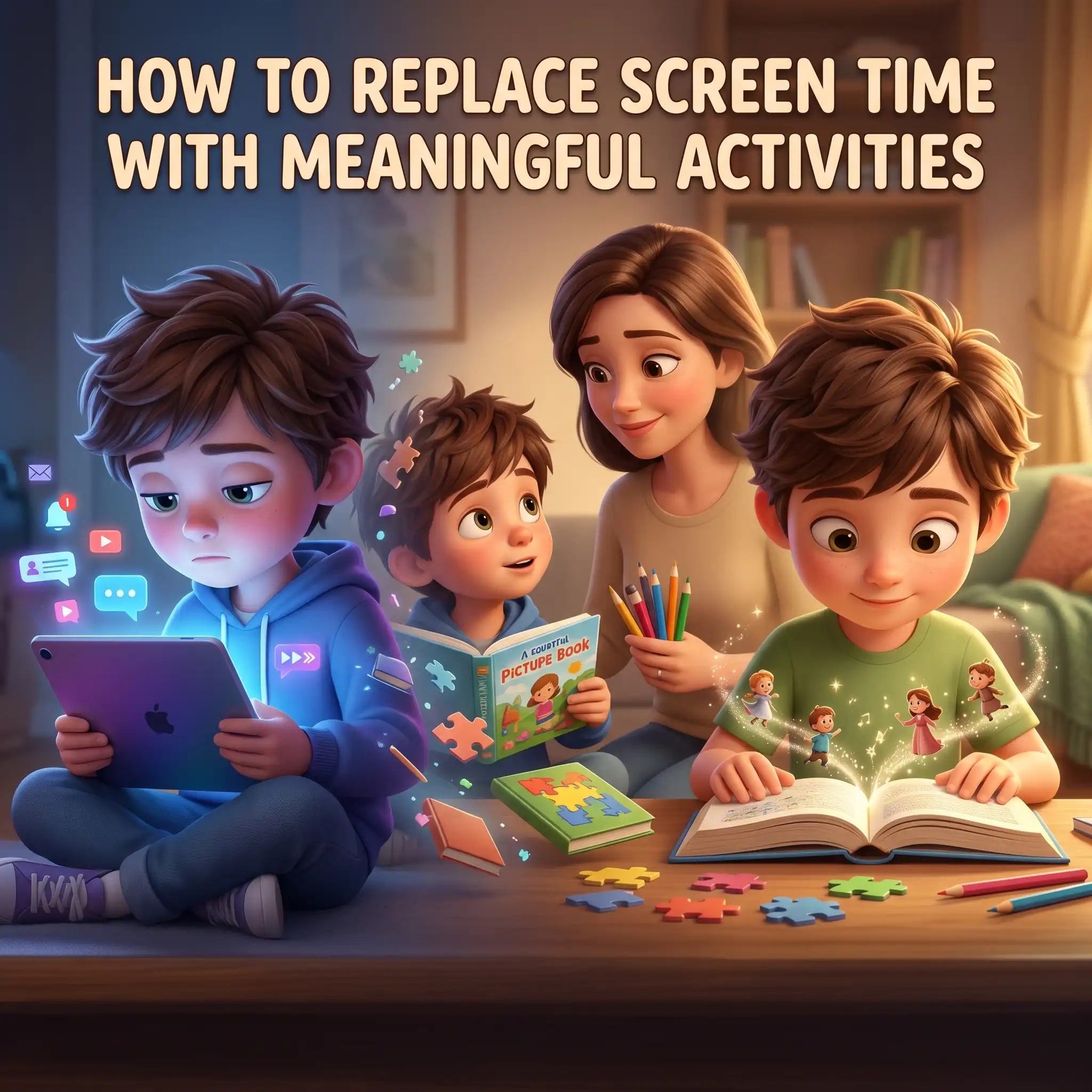
How to Replace Screen Time With Meaningful Activities
It is 5:00 PM. You need to chop vegetables, boil water, and somehow keep the house from burning down. Handing your child a tablet feels like the only way to buy yourself twenty minutes of uninterrupted peace.
We have all been there, and there is absolutely zero shame in it.
But if you are noticing that the twenty minutes has slowly crept into two hours, and your child is becoming increasingly irritable, you are probably ready to make a change. The problem? When you finally decide to take the screen away, you are met with whining, crying, and the dreaded phrase: "I'm bored!"
Taking away a screen leaves a massive, terrifying void in a child's day. You cannot just remove the iPad and expect them to quietly go sit in the corner and knit. You have to actively replace that digital dopamine with something equally engaging, but far more beneficial. Here is how to swap screens for meaningful play, backed by science, without losing your sanity.
The Science: Why "Go Play" Doesn't Work
When a child has been glued to a fast-paced, highly stimulating cartoon, their brain is in a passive, dopamine-flooded state. If you suddenly turn it off and say, "Go play with your toys," they will likely fail. Their brain is experiencing a rapid drop in stimulation, and unstructured play requires a lot of cognitive effort that they simply don't have the energy for in that moment.
The Science: A landmark report published by the American Academy of Pediatrics (Yogman et al., 2018) titled The Power of Play highlights that unstructured, active play is fundamentally critical for building a child's executive functioning, emotional regulation, and spatial math skills. However, a separate major study in The Lancet Child & Adolescent Health (Walsh et al., 2018) showed that to see global cognitive benefits, parents must actively substitute sedentary screen time with specific behaviors: physical activity, healthy sleep, and interactive play.
In short: you have to bridge the gap. You have to give them an activity that catches their attention but forces their brain to wake up and do the work.
1. The "Sensory Bin" Lifeline
If you need your child to sit quietly for thirty minutes while you cook or work, you need to engage their hands. Sensory play is deeply grounding for the nervous system and acts as the perfect antidote to digital overstimulation.
The Fix: Create a dedicated "Yes Space" at the kitchen table with a sensory bin. It doesn't need to be Pinterest-perfect. Fill a large plastic tub with dry rice, dried beans, or kinetic sand. Throw in a few measuring cups, spoons, and toy cars. The tactile input of pouring, scooping, and digging demands immense focus and naturally soothes a dysregulated child.
2. Strewing: The Art of Silent Invitations
Children are naturally curious, but they are also easily overwhelmed. If they walk into a playroom with three overflowing toy boxes, their brain short-circuits. They will walk right back out and ask for the TV.
The Fix: Practice "strewing." Before your child wakes up or gets home from school, set up a small, highly intentional invitation to play.
3. Audiobooks and Podcasts (The Ultimate Screen Swap)
Sometimes kids just want to zone out and be entertained. After a long day at school, they are genuinely too tired for complex, imaginative play.
The Fix: Swap the visual screen for an audio experience. Audiobooks and kid-friendly storytelling podcasts (like Brains On! or Wow in the World) are absolute game-changers. Listening to a story activates the brain's language processing centers and forces the child to use their own imagination to visualize the plot, unlike a TV show which does the visualizing for them. Set them up with an audiobook and a bowl of snacks, and watch them happily zone out while still building their cognitive stamina.
4. Invite Them Into the "Chore"
When you turn off the TV because you "have things to do," kids often feel pushed away. What if the thing you have to do becomes the meaningful activity?
The Fix: Toddlers and young children desperately want to feel capable and useful. If you need to cook dinner, pull up a stool. Give them a butter knife and a soft banana to chop. Let them wash the plastic Tupperware in a sink full of soapy bubbles. If you are folding laundry, ask them to find all the matching socks. It takes a little more patience on your end, but it replaces screen time with high-quality connection and life-skill building.
5. Prescribe "Heavy Work"
If your child is bouncing off the walls begging for the tablet, their body is actually crying out for proprioceptive input—the physical sensation of their joints and muscles working.
The Fix: Give them a physical mission. Have them carry a heavy laundry basket down the hallway. Tell them to push a heavy dining chair into the other room. Have a five-minute pillow fight. "Heavy work" rapidly organizes the central nervous system, calming the child down and making them physically ready to engage in quieter, screen-free play.
The Bottom Line
You don't have to throw your TV in the garbage to raise healthy, creative kids. Replacing screen time is just about having a few back-up plans ready when you need them.
The next time you are tempted to hand over the tablet, try strewing a few LEGOs or turning on an audiobook first. It might be a little messy, and it might take a few days for them to adjust, but watching their imagination come back to life is entirely worth it.
Share this post! Are you actively trying to cut back on screens in your house? Hit the share button to pass these stress-free, science-backed alternatives along to a fellow parent who could use a little inspiration today!
Responses
No responses yet. Be the first to share your thoughts.